Creative & Travel
Printable Knitting Graph Paper
Knitter’s graph paper whose cells match your gauge: enter stitches and rows per 4 in (10 cm) from your swatch, and a chart drawn on it looks like the finished fabric instead of being stretched tall like square graph paper.
What you can customize
- Stitches per 10 cm
- Rows per 10 cm
- Count every 10
Works well in
- Traveler's Notebook Passport
- A6
- Traveler's Notebook Regular
- B6 (JIS)
- A5
- US Half Letter
- B5 (ISO)
- A4
- US Letter
All page sizes, from Passport to A4
Try it in another style
Start from a preset
- Worsted gauge, 18 sts × 24 rows, US Letter Typical for worsted-weight yarn on US 8 needles. Open in the maker →
- DK gauge, 22 sts × 30 rows The default, common for DK yarn and many sweater patterns. Open in the maker →
- Fingering gauge for Fair Isle, 28 sts × 32 rows Small cells for stranded colorwork in fingering yarn. Open in the maker →
- Cross-stitch graph paper, 10 count, A4 Square cells for 10-count fabric, about 40 per 10 cm. Open in the maker →
What’s on the knitting graph paper
- A grid of cells sized 100 mm ÷ stitches wide and 100 mm ÷ rows tall, centred on the page.
- A darker line every 10 stitches and every 10 rows.
- Optional numbers every 10, counted from the bottom right.
Chart a motif for a hat, a yoke or mittens, plan intarsia shapes, or sketch a whole sweater front at true proportions. Color the cells with pencils and keep the chart beside your knitting.
Printing it
- Choose a preset or enter your gauge, then Download PDF → Reading order.
- Print at 100% (Actual size); otherwise the cells no longer match your gauge.
- Measure 10 cells against a ruler to check before you start a large chart.
Free sample PDFs
Print at 100% (actual size). Made with the same engine as the maker, so the spacing is exact.
Frequently asked questions
Why use knitting graph paper instead of normal graph paper?
Knit stitches are wider than they are tall, so a motif drawn on square graph paper comes out squashed in the fabric. Here each cell has the width and height of one stitch at your gauge, so a circle stays round.
How do I enter my gauge?
Knit a swatch, count the stitches and rows over 4 in (10 cm), and type them in Stitches per 10 cm and Rows per 10 cm. The values are the same for 4 in and 10 cm.
Which way are the numbers counted?
From the bottom right, like knitting charts: you read the first row from right to left, starting at the bottom. With Count every 10 on, every tenth stitch and row is numbered.
Can I use it for cross-stitch?
Yes, with equal stitch and row values for square cells. The finest setting is 40 per 10 cm; for the exact count of your fabric, a square grid with a fixed cell size may suit better.
Related guides
- Calibrate your printer for exact sizesMeasure your printer once so pages print at exactly the right size, find its unprintable margins, and line up the front and back of each sheet.
- Paper sizes, margins and binding allowanceWhich printer paper fits which notebook size, how to set margins and the binding margin, and when to use bleed and creep.
- Choosing paper for printed notebooksPaper weight, finish, size and grain for homemade notebooks and planners: what works with fountain pens, markers and pencil, and what folds well.
Related templates
-
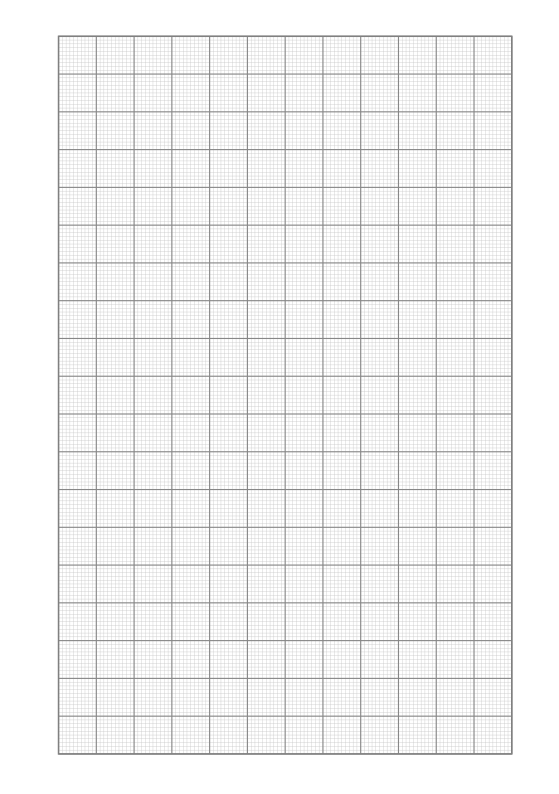
Graph Paper
Engineering graph paper with major and minor lines.
-
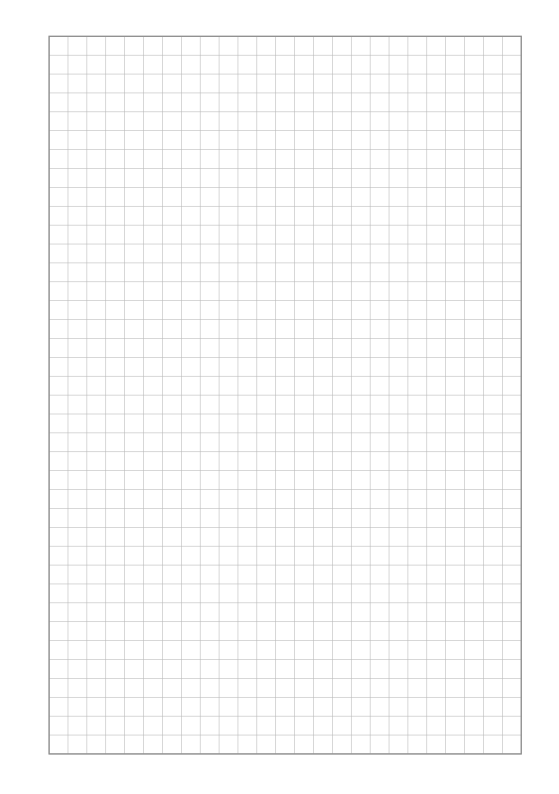
Square Grid
Quad-ruled squares for notes, math and diagrams.
-
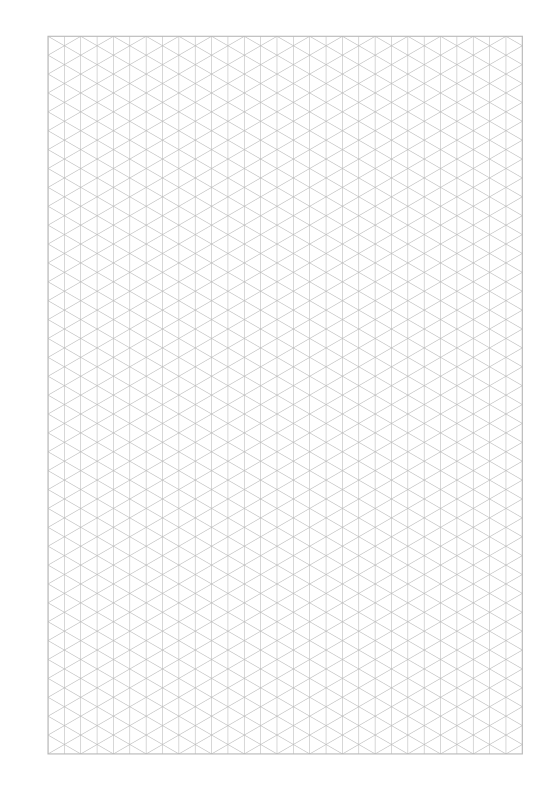
Isometric Grid
Triangular grid for 3D drawings and patterns.
-
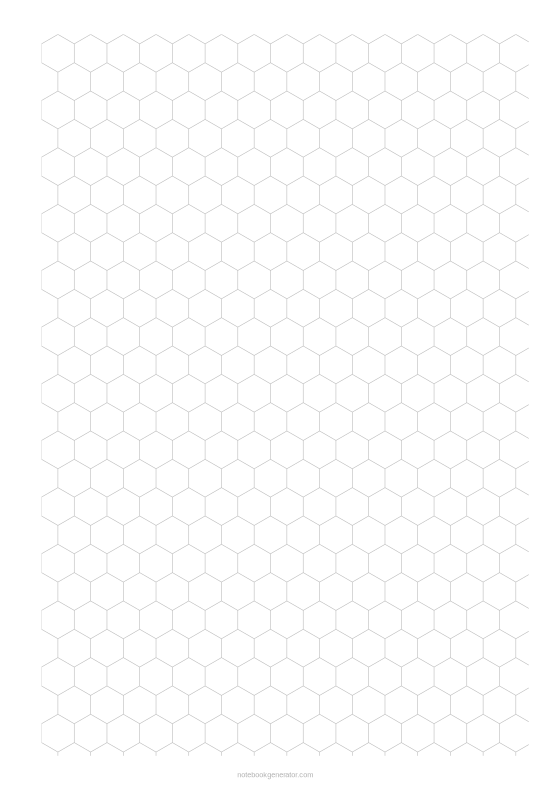
Hexagon Paper
Hex grid for game maps, quilting, chemistry and design.
-
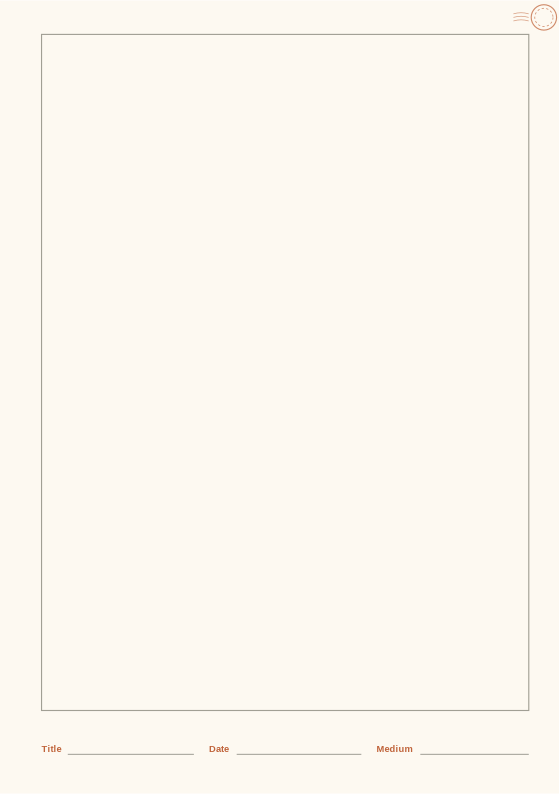
Sketchbook
Framed drawing area with a caption strip.
-
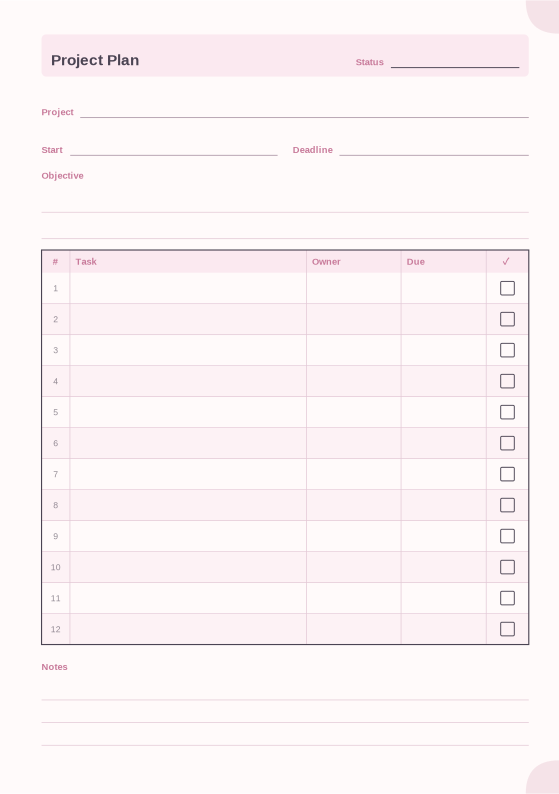
Project Planner
Objective, dates and a task table.