Basic Paper
Printable Tian Zi Ge Paper (Chinese Character Practice Grid)
Printable tian zi ge (田字格) paper for practicing Chinese characters and Japanese kanji, with dashed guides in every square. Switch to mi zi ge (米字格) or plain squares, and add pinyin lines above each row.
What you can customize
- Cell style
- Cell size
- Pinyin lines
Works well in
- Traveler's Notebook Passport
- A6
- Traveler's Notebook Regular
- B6 (JIS)
- A5
- US Half Letter
- B5 (ISO)
- A4
- US Letter
All page sizes, from Passport to A4
Try it in another style
Start from a preset
- Tian zi ge paper, US Letter 15 mm squares with a dashed cross, for everyday character practice. Open in the maker →
- Tian zi ge with pinyin lines, A4 A four-line pinyin band above every row of characters. Open in the maker →
- Mi zi ge practice book, A5 Squares with diagonals for stroke balance, printed as a booklet. Open in the maker →
- Large 20 mm grid for beginners, US Letter Big cells for children and calligraphy brush pens. Open in the maker →
Practice grids for characters
Every row of the tian zi ge paper is a line of squares with solid outer lines, and the page fills with as many full rows as fit. You can change:
- Cell style: tian (田, dashed cross), mi (米, cross and diagonals) or plain square cells.
- Cell size: 8 to 25 mm.
- Pinyin: a four-line band above each row for pinyin and tone marks.
The guides are drawn in the theme’s accent color, light enough to write over. Add a vocabulary page next to the practice pages to list new words and meanings.
How to print tian zi ge paper
- For worksheets, use the Letter or A4 preset and choose Download PDF → Reading order.
- For a practice book, use the A5 preset and choose Print-ready booklet. Print double-sided (flip on the short edge), fold and staple.
- Print at 100% (Actual size) so the squares keep the size you chose.
Free sample PDFs
Print at 100% (actual size). Made with the same engine as the maker, so the spacing is exact.
Frequently asked questions
What is the difference between tian zi ge and mi zi ge?
Tian zi ge (田字格) divides each square into four quarters with a dashed cross. Mi zi ge (米字格) adds the two diagonals, which helps you place slanted strokes and keep complex characters balanced. Plain squares (方格) are for more confident writers.
What cell size should I choose?
Beginners and children usually start with 18–20 mm squares; 12–15 mm is common for regular practice, and 8–10 mm for writing sentences. You can set any size from 8 to 25 mm.
Can I add pinyin above the characters?
Yes. Turn on the pinyin option to add a four-line, three-space band (四线三格) above each row, for writing pinyin with tone marks over the characters.
Does it work for Japanese kanji or kana?
Yes. The grid is the same for kanji and kana practice. For compositions with one character per square, use the Manuscript Paper (genkō yōshi) template.
Related guides
- How to print a booklet double-sidedPrint your notebook PDF at actual size, choose the right duplex setting, and get pages that come out in the right order after folding.
- Calibrate your printer for exact sizesMeasure your printer once so pages print at exactly the right size, find its unprintable margins, and line up the front and back of each sheet.
- How to staple a booklet in the middleFold and staple a booklet through the centre with a long-reach or normal stapler. Follow the sheet-order, backing and staple-closing steps.
Related templates
-
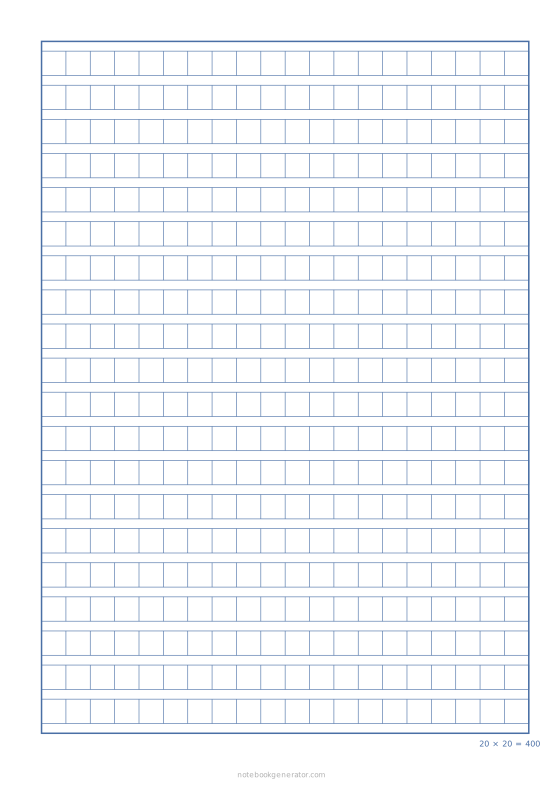
Manuscript Paper (Genkō Yōshi)
Square-cell composition paper: 20 × 20 = 400 characters per page.
-
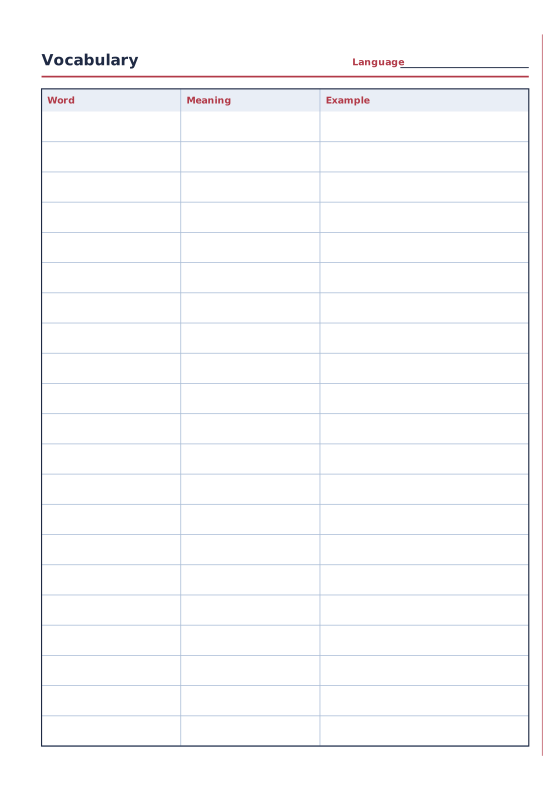
Vocabulary Notebook
Word, meaning and example columns.
-
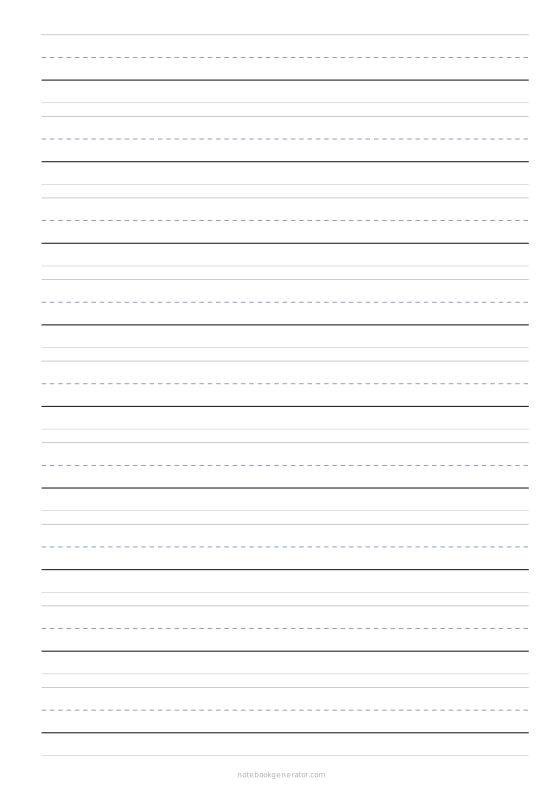
Handwriting Practice Paper
Primary writing lines with a dashed midline for learning to write.
-
Square Grid
Quad-ruled squares for notes, math and diagrams.
-
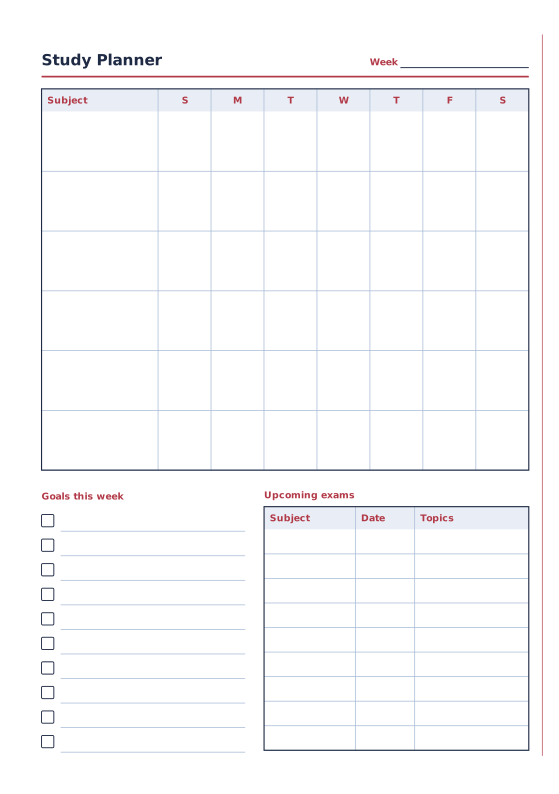
Study Planner
Weekly subject grid, goals and exam dates.