Basic Paper
Printable Genkouyoushi (Japanese Manuscript Paper)
Printable genkouyoushi (原稿用紙) manuscript paper with one square per character and a narrow gap between lines, for Japanese essays and compositions. Use the classic 20 × 20 layout or set your own, and write vertically or horizontally.
What you can customize
- Characters per line
- Lines
- Writing direction
Works well in
- Traveler's Notebook Passport
- A6
- Traveler's Notebook Regular
- B6 (JIS)
- A5
- US Half Letter
- B5 (ISO)
- A4
- US Letter
All page sizes, from Passport to A4
Try it in another style
Start from a preset
- Genkouyoushi 20 × 20, vertical, A4 400 characters per page, written top to bottom and right to left. Open in the maker →
- Manuscript paper 20 × 20, horizontal, US Letter 400 squares written left to right, for Chinese 稿纸 or Korean 원고지. Open in the maker →
- Composition notebook, A5 Larger squares (15 × 10) for learners, printed as a booklet. Open in the maker →
- Children's genkouyoushi, 10 × 8, US Letter Big squares for kana practice and short sentences. Open in the maker →
Genkouyoushi layout and settings
Each page is a grid of square cells arranged in lines, with a narrow gap between lines for furigana, corrections or punctuation, and a heavier outer frame. Below the grid, the page prints the character count. You can change:
- Characters per line: 10 to 30.
- Lines: 5 to 30.
- Direction: horizontal (lines run top to bottom, written left to right) or vertical (columns run right to left, written top to bottom).
The squares stay square and are sized to fit the page, so A4 and Letter give you the most comfortable cells for 20 × 20.
How to print genkouyoushi
- For essay sheets, use the A4 or Letter preset and choose Download PDF → Reading order.
- For a composition notebook, use the A5 preset and choose Print-ready booklet. Print double-sided (flip on the short edge), fold and staple.
- Print at 100% (Actual size) so the grid isn’t shrunk.
Free sample PDFs
Print at 100% (actual size). Made with the same engine as the maker, so the spacing is exact.
Frequently asked questions
How do you write on genkouyoushi?
Write one character per square, including small kana and punctuation. In vertical writing, start at the top of the right-hand column and move left. Leave one square empty at the start of each paragraph. The title and your name usually go in the first columns.
Why is 20 × 20 the standard?
Twenty squares per line and twenty lines make 400 characters, so you can count the length of an essay at a glance. The page shows the total (for example 20 × 20 = 400) below the grid.
Can I use it for Chinese or Korean?
Yes. Chinese 稿纸 and Korean 원고지 (wongoji) use the same one-square-per-character layout. Choose horizontal for left-to-right writing, which is common in Chinese and Korean schools.
How big are the squares?
The grid always fills the page, so the square size depends on the paper size and on your character and line counts (10–30 per line, 5–30 lines). Fewer characters or a larger page means bigger squares.
Related guides
- How to print a booklet double-sidedPrint your notebook PDF at actual size, choose the right duplex setting, and get pages that come out in the right order after folding.
- Paper sizes, margins and binding allowanceWhich printer paper fits which notebook size, how to set margins and the binding margin, and when to use bleed and creep.
- How to staple a booklet in the middleFold and staple a booklet through the centre with a long-reach or normal stapler. Follow the sheet-order, backing and staple-closing steps.
Related templates
-
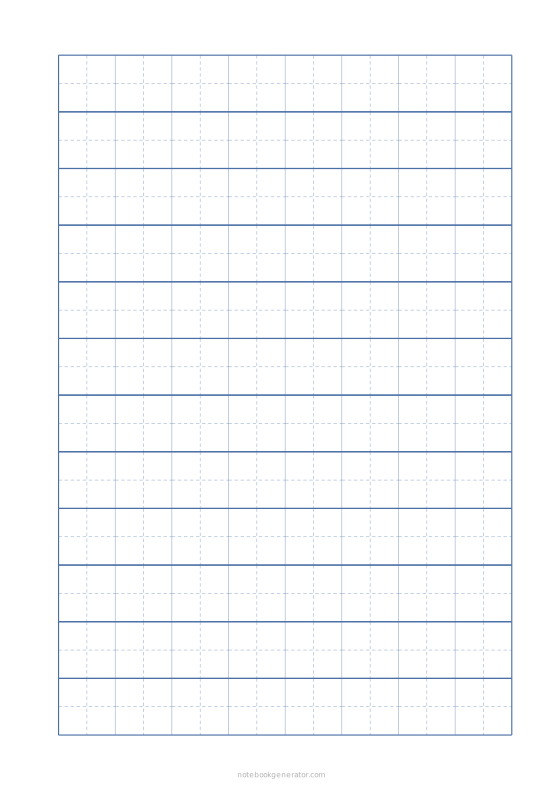
Chinese Character Practice Grid
Tian zi ge (田) or mi zi ge (米) squares, with an optional pinyin band.
-
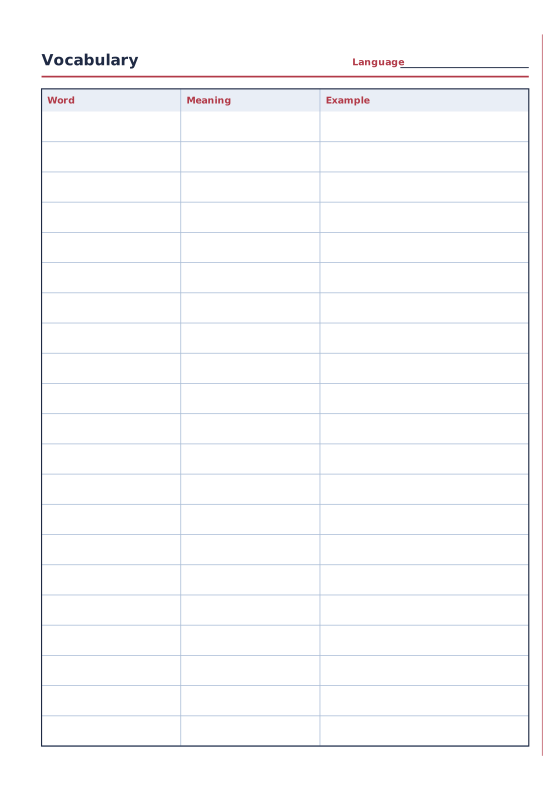
Vocabulary Notebook
Word, meaning and example columns.
-
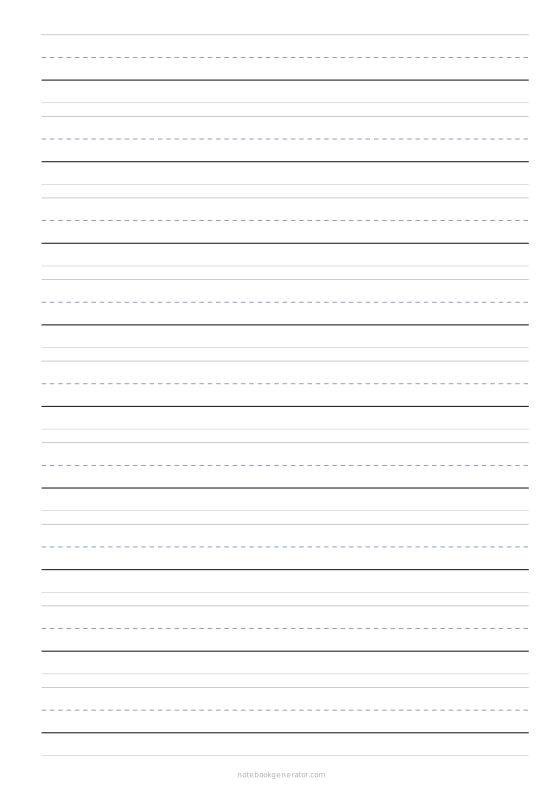
Handwriting Practice Paper
Primary writing lines with a dashed midline for learning to write.
-
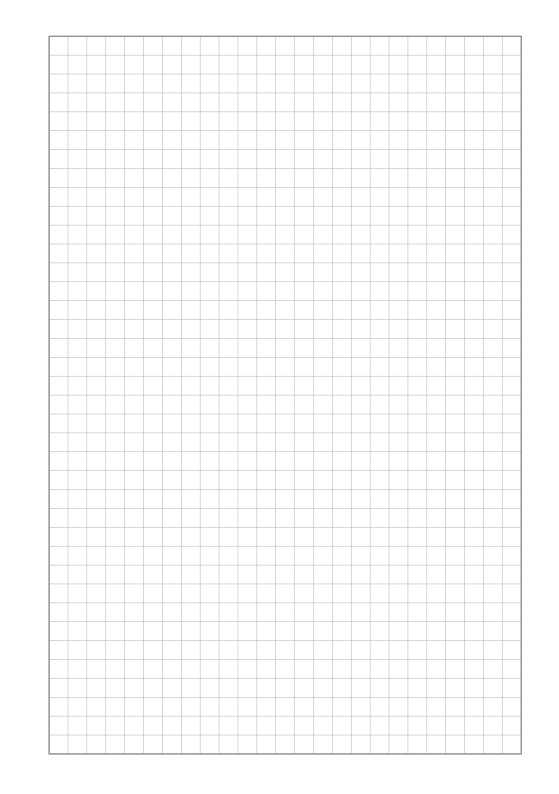
Square Grid
Quad-ruled squares for notes, math and diagrams.
-
Ruled Paper
Lined writing paper with adjustable line spacing.