5 min read
College ruled vs wide ruled vs narrow ruled: line spacing explained
Wide ruled is 11/32 in (8.7 mm), college ruled 9/32 in (7.1 mm) and narrow ruled 1/4 in (6.35 mm). Which to choose, plus handwriting paper and rulings worldwide.
On this page
College ruled paper has 9/32 inch (7.1 mm) between lines, wide ruled has 11/32 inch (8.7 mm) and narrow ruled has 1/4 inch (6.35 mm). Wide ruled suits younger children and large handwriting, college ruled is the everyday choice for high school, university and office notes, and narrow ruled fits the most words on a page. Outside the US, lined paper is described in millimetres instead, with 8 mm a common spacing for A4 pads.
US rulings at a glance
| Ruling | Line spacing | Lines per inch | Best for |
|---|---|---|---|
| Wide ruled (also called legal ruled) | 11/32 in (8.7 mm) | about 3 | Younger students, large handwriting, fountain pens |
| College ruled (medium ruled) | 9/32 in (7.1 mm) | about 3.5 | High school, university and everyday notes |
| Narrow ruled | 1/4 in (6.35 mm) | 4 | Small handwriting, dense notes, small notebooks |
The difference is only about 1.5 mm per line, but over a full Letter page it adds up to several extra lines. US filler paper usually also has a vertical margin line on the left and three holes for a binder.
Which ruling should you choose?
- Handwriting size. Write a sentence on a sample page. If your tall letters touch the line above or your letters feel cramped, go one ruling wider.
- Age. Children who are still forming letters write large, so school supply lists for younger grades often ask for wide ruled paper. Older students usually move to college ruled.
- How much you write. For fast lecture notes, college or narrow ruled fits more on each page. For essays you will mark up later, wide ruled leaves room for corrections.
- Your pen. Broad fountain pen nibs and felt tips look better with wider spacing; fine gel pens and pencils work well on narrow ruled.
- Page size. Small notebooks such as A6 or passport size look more balanced with narrower lines, around 6 mm.
Handwriting paper for young children
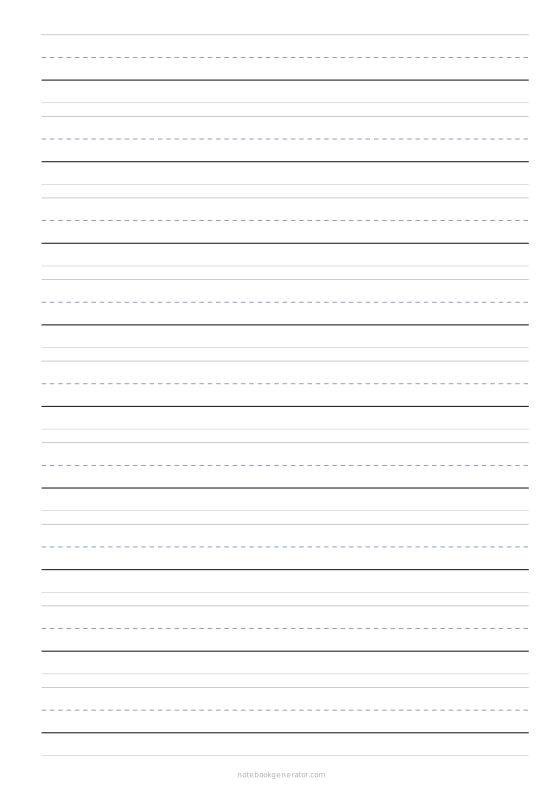
Before wide ruled paper, children learn on handwriting paper (also called primary paper). Each writing row has a solid top line, a dashed midline and a solid baseline. Small letters such as a, c and e fill the space between the baseline and the midline, tall letters like b, d and h reach the top line, and letters such as g, p and y drop below the baseline.
The Handwriting Practice Paper template adds a descender line under each row. You can set the Letter height from 3 to 15 mm, shade the middle band and add slant lines for cursive. Start large for beginners and make the rows smaller as their writing becomes more controlled. Try it on US Letter, or see more ideas for kids and homeschool.
Lined paper around the world
School paper varies a lot from country to country:
- UK, Ireland and Australia: lined paper is labelled in millimetres. A4 pads and exercise books are commonly 8 mm ruled, and “feint and margin” means light lines with a margin line. “Narrow feint” pads have lines closer together.
- India: school notebooks are often sold as single line, four line (for practising English handwriting) and square line.
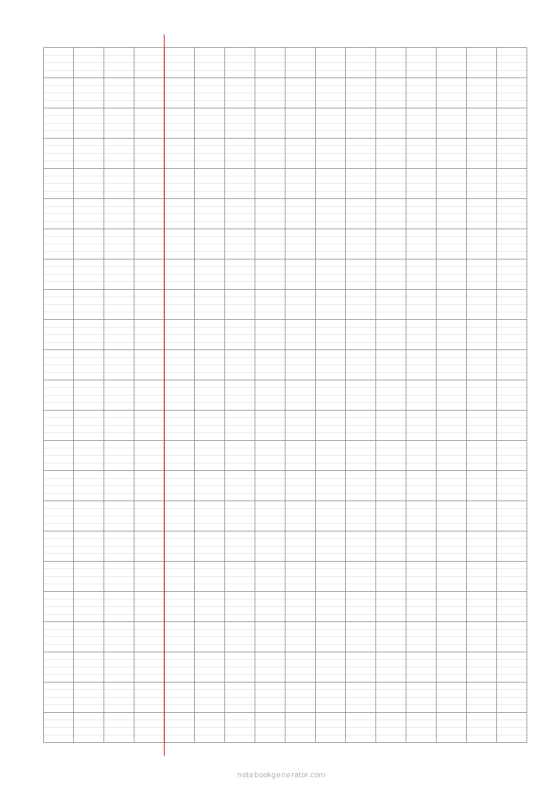
- France: the Seyès ruling (“grands carreaux”) is used in schools. Each 8 mm square has three fine lines 2 mm apart that guide letter height, plus a margin line. Print it with the Seyès Ruled Paper template.
- Germany, Poland, Russia and much of continental Europe: pupils use special rulings with guide lines in the first school years, then plain lined paper and 5 mm squared paper, the standard for maths. The Square Grid template prints it at any spacing.
- Japan: notebooks are labelled by ruling: A ruling is 7 mm, B ruling 6 mm and C ruling 5 mm.
- China and Taiwan: children practise characters in tian zi ge grids (the Chinese Character Practice Grid) and learn English letters on four-line paper.
Set your own line spacing in the maker
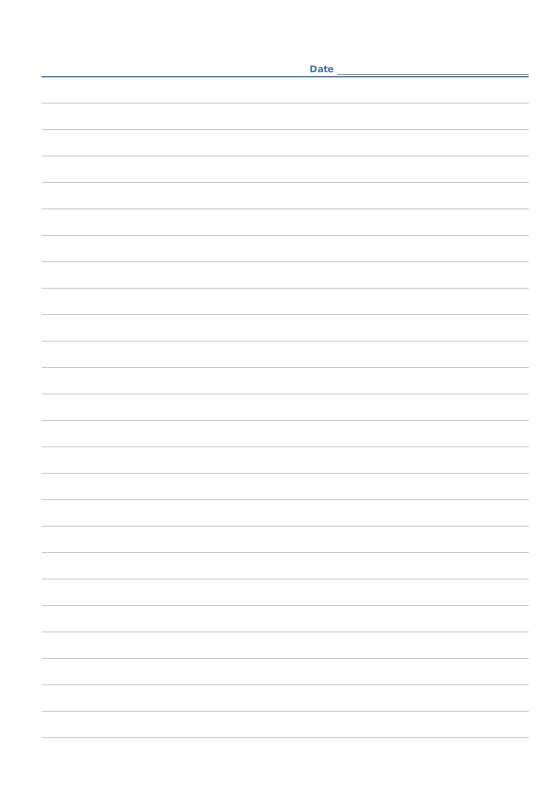
The Ruled Paper template draws the lines at print time, so you can choose any Line spacing from 4 to 14 mm in 0.1 mm steps. You can also add a Margin line, a Date line at top and solid or dashed rules. These links open the maker with the spacing already set:
Print at Actual size / 100%. “Fit to page” shrinks the page and the lines end up closer together than the spacing you set. If they are still slightly off, run the printer calibration once. To mix lined pages with Cornell or grid pages in one notebook, see note-taking methods.
FAQ
Is college ruled or wide ruled better?
Neither is better in general. College ruled fits more lines on a page and suits most teenagers and adults; wide ruled is easier for children, large handwriting and broad pens.
Is wide ruled paper for kids?
Mostly, yes. The taller rows suit children who are still learning letter sizes, which is why many elementary school lists ask for it, but anyone with large handwriting can use it.
How many mm is college ruled?
College ruled lines are 9/32 inch apart, which is about 7.1 mm. Wide ruled is about 8.7 mm and narrow ruled 6.35 mm.
What line spacing is A4 lined paper?
There is no single standard, but 8 mm is very common for A4 pads and exercise books in the UK and Australia. Narrower spacings of 6 or 7 mm are also sold.
What is narrow ruled paper used for?
Narrow ruled (1/4 inch, 6.35 mm) is for people with small handwriting who want more lines per page, and for small notebooks where wide lines would look oversized.
Featured templates
Start from a template, then change line spacing, dates, colors and layout options.