5 min read
Habit tracker ideas: 60 habits to track (and how to make it stick)
60 habit tracker ideas for health, mind, productivity, home, money and learning, how to set up a tracker you will keep using, and a free printable template.
On this page
Good habit tracker ideas are small, specific actions you can answer with a simple yes or no every day: drink a glass of water before breakfast, walk for 20 minutes, read 10 pages, no phone in bed. Below are 60 ideas in six groups. Pick three to five, write them in a monthly grid and tick a box each day you do them.
How to set up a habit tracker that works
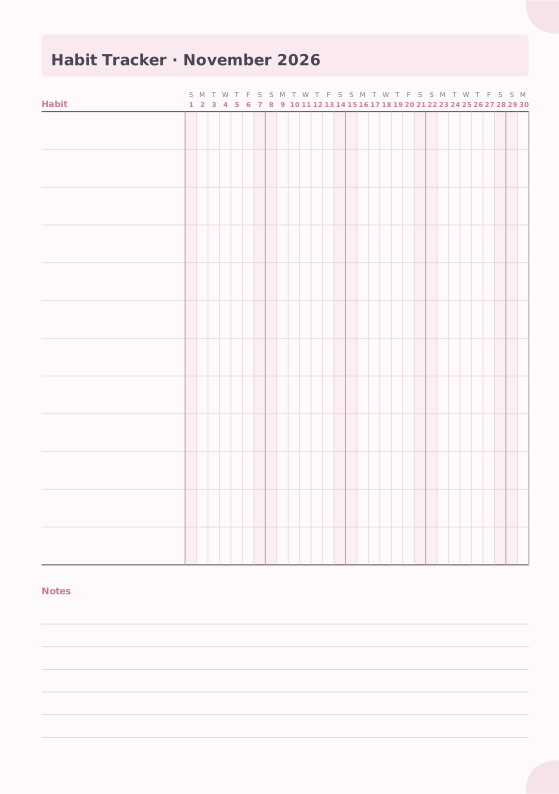
- Choose three to five habits. The Habit Tracker template holds up to 20, but a short list is easier to keep.
- Make each habit a yes-or-no question. “Read 10 pages” can be ticked; “read more” cannot.
- One row per habit, one column per day. At the end of the day, colour in the square for each habit you did.
- Keep it where you see it: at the front of your planner, or on the fridge.
- Review once a week. Is a habit too big? Make it smaller. Not useful? Replace it.
60 habit tracker ideas
Health
- Drink a glass of water before breakfast
- Walk for 20 minutes
- Stretch for 5 minutes
- Eat a portion of vegetables with lunch and dinner
- Exercise (log the details in a Fitness Log)
- Lights out by a set time
- No snacks after dinner
- Take medication or vitamins
- Floss
- No sugary drinks
Mind and wellbeing
- Meditate or breathe quietly for 5 minutes
- Write three lines in a journal
- Note three things you are grateful for
- No phone for the first 30 minutes of the day
- No screens in the hour before bed
- Spend time outside
- Rate your mood (try the Mood Tracker)
- Read something just for fun
- Take a real lunch break
- Do something creative for 10 minutes
Productivity
- Write your top three priorities for the day
- Plan tomorrow before you finish today
- One hour of focused work without interruptions
- Do the hardest task first
- Check email only at set times
- No social media before noon
- Clear your desk at the end of the day
- Process your inbox or in-tray
- Review your calendar for the week
- Work on a personal project for 15 minutes
Home
- Make the bed
- 10-minute tidy-up
- Dishes done before bed
- One load of laundry
- Water the plants
- Wipe the kitchen counters
- Put away one thing that has no home
- Declutter one item
- Prepare tomorrow’s clothes or bag
- Follow the Cleaning Schedule task for the day
Money
- Write down every expense (the Expense Tracker adds them up)
- No-spend day
- Take a packed lunch
- Make coffee at home
- Check your bank balance
- Put a small amount into savings
- Wait 24 hours before buying anything non-essential
- Cook dinner at home
- Use what is already in the fridge before shopping
- Sell or give away one unused item
Learning and relationships
- Read 10 pages (log books in a Reading Journal)
- Practise a language for 15 minutes
- Learn five new words
- Practise an instrument (a Music Practice Log helps)
- Write 200 words
- Watch or listen to something educational
- Call or message a friend or family member
- Eat a meal together without phones
- Say thank you to someone
- Spend 15 minutes on a hobby you want to improve
How to make a habit stick
Give it time. In one study, Phillippa Lally and colleagues at University College London (2009) found that it took a median of 66 days for a new behaviour to become automatic, with a very wide range of about 18 to 254 days depending on the person and the habit. Treat that as a guide, not a rule: some habits take weeks, others months.
Stack it on an existing habit. “Habit stacking”, a term popularised by James Clear’s book Atomic Habits (2018), means linking a new habit to something you already do: “After I pour my morning coffee, I write three lines in my journal.”
Never miss twice. Also from James Clear: missing one day happens to everyone. What matters is getting back on track the next day, so a single gap in your tracker does not turn into a week.
Make it small. A two-minute version you can do on your worst day beats an ambitious plan you skip. Ten push-ups count. One page counts.
Habit tracker layouts
- Monthly grid: habits down the side and days across. The dated Habit Tracker prints weekday initials and shades weekends.
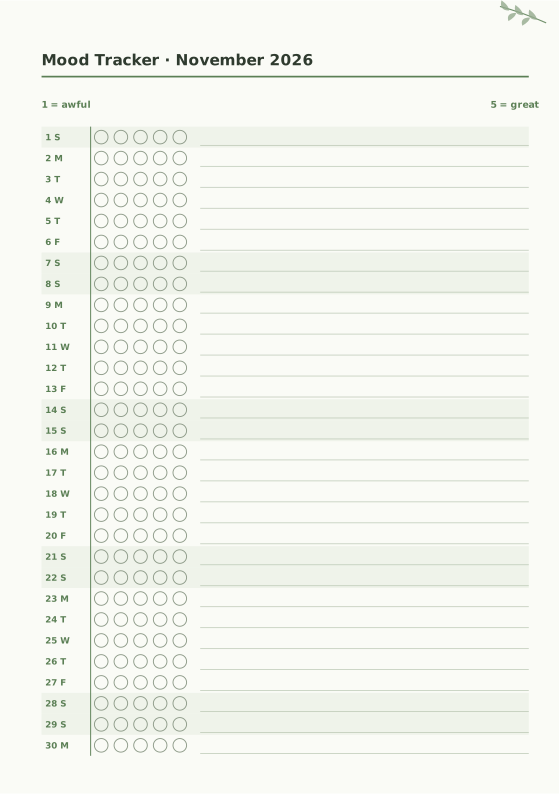
- Mood tracker: one rating per day on a 3- to 7-point scale, with space for a short note.
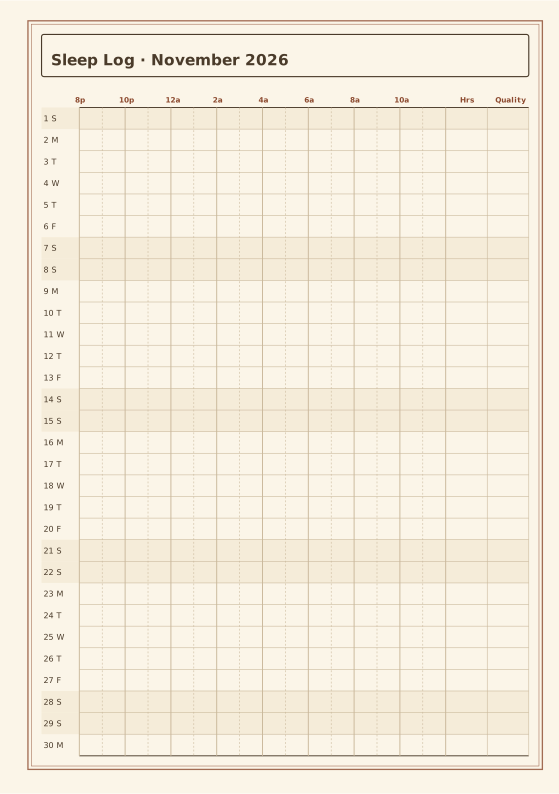
- Sleep tracker: the Sleep Tracker lets you shade the hours you slept each night and note your total and sleep quality.
- Detail logs: for habits with numbers, such as workouts or spending, tick the box in your tracker and record the details in a log.
Print your habit tracker
Open 12 months of habit trackers in A5. The pages are dated from the current month, and you can set the number of Habits (4 to 20) in the page options. Add a mood or sleep tracker for each month, then print the set as an A5 booklet on A4 (or Half Letter on Letter). For a single sheet on the fridge, switch the page size to A4 or Letter and print one page.
Habit trackers are also a classic page in a bullet journal: see how to start a bullet journal.
FAQ
How many habits should I track at once?
Start with three to five. Once they feel easy, add one more rather than starting with a list of twenty.
What should I put in a habit tracker?
Small daily actions you control and can answer with yes or no, such as “walk 20 minutes” or “no phone in bed”. Avoid outcomes like “lose weight” that you cannot tick off each day.
How long does it take to form a habit?
It varies. One well-known study from University College London found a median of 66 days, with a range of about 18 to 254 days.
What should I do if I miss a day?
Leave the box empty and do the habit the next day. Try never to miss twice in a row.
Featured templates
Start from a template, then change line spacing, dates, colors and layout options.