5 min read
How to meal plan for the week: a simple method for beginners
Meal plan for the week in simple steps: check your calendar, use what you have, pick easy theme nights, write a shopping list by aisle and prep once. Free printable.
On this page
To meal plan for the week, check what is happening on each day, look at what you already have in the fridge, freezer and cupboards, choose a dinner for each night, and then write one shopping list from the plan. Theme nights such as pasta Monday or taco Tuesday make choosing faster, and a planned leftovers night cuts waste. Once you have a short list of favourite meals, planning becomes quick.
Before you plan: check the week and your kitchen
Look at the calendar first. Late meetings, sports practice, guests or an evening out all change what you can cook. Put quick meals on busy nights and save recipes that take longer for free evenings or the weekend.
Then shop your kitchen. Open the fridge, freezer and pantry and note what needs using up: half a bag of spinach, the last of the rice, chicken in the freezer. Plan one or two meals around those first, so less food ends up in the bin.
Choose meals the easy way: theme nights
Deciding what to cook seven times a week is tiring. Theme nights turn it into a much smaller choice:
- Pasta Monday: spaghetti, a bake, or pasta with whatever vegetables need using.
- Taco Tuesday: tacos, burritos or wraps with beans, chicken or minced (ground) meat.
- Tray bake Wednesday: meat or tofu and vegetables roasted on one sheet pan.
- Soup night: a big pot of vegetable or lentil soup with bread.
- Pizza Friday: homemade pizza, or a takeaway-style curry or burgers made at home.
- Leftovers night: finish everything in the fridge before the next shop.
- Batch-cook Sunday: one big recipe that also covers lunch on Monday.
Keep a list of the meals your household likes. After a few weeks you can simply rotate them.
A sample weekly meal plan
| Day | Dinner | Tip |
|---|---|---|
| Monday | Spaghetti with tomato and lentil sauce, side salad | Make double sauce and freeze half |
| Tuesday | Tacos with beans or minced (ground) beef, salsa and cheese | Chop the toppings while the filling cooks |
| Wednesday | Sheet-pan chicken thighs with potatoes and peppers | One tray, about 10 minutes of prep |
| Thursday | Vegetable soup with crusty bread | Uses up whatever is left in the vegetable drawer |
| Friday | Homemade pizza | Ready-made bases or a simple dough |
| Saturday | Leftovers night | Clear the fridge before shopping |
| Sunday | Big pot of chilli or dal with rice | Cook extra rice and portion lunches for the week |
For breakfast and lunch, most families keep it simple: two or three breakfasts on rotation and lunches made from dinner leftovers.
Turn the plan into a shopping list
Go through each meal, check what you already have and write down only what is missing. Grouping the list by store section saves time in the shop and stops you forgetting things:
- Fruit and vegetables
- Dairy and eggs
- Meat and fish
- Bakery
- Pantry (cans, pasta, rice, spices)
- Frozen
- Household
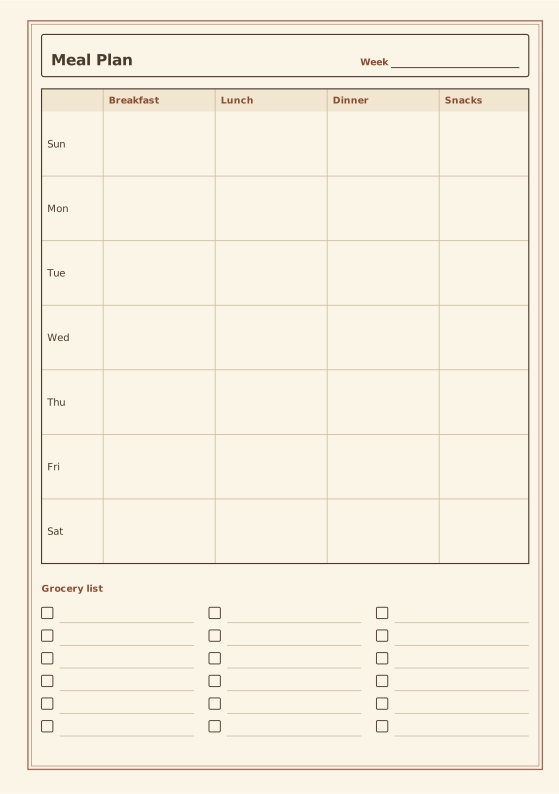
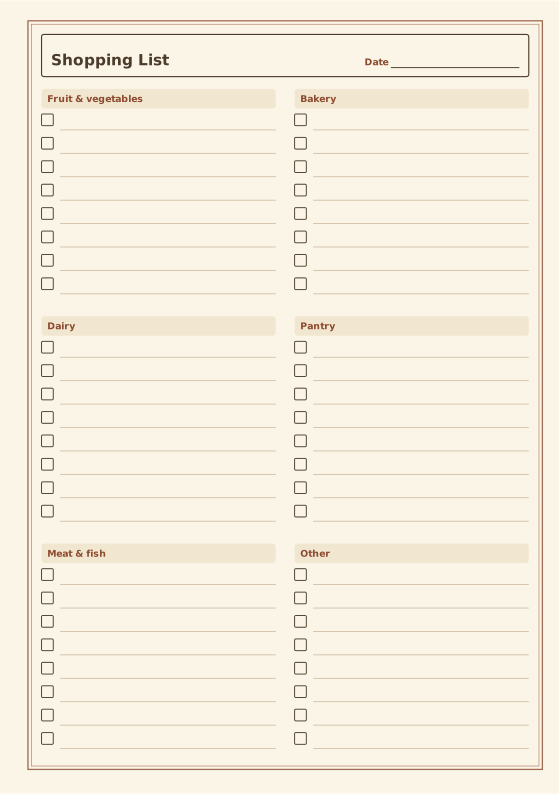
The Shopping List template is already organised by aisle, with two to eight sections. The Meal Planner also has a grocery list in three checklist columns underneath the week’s meals, so plan and list sit on the same page.
Prep once, eat all week
An hour or two of preparation on the weekend makes weeknight cooking much faster:
- Wash and chop vegetables for the first few days.
- Cook a big batch of rice, pasta or another grain.
- Make one sauce or soup that covers two meals.
- Portion lunches into containers.
- Move tomorrow’s frozen ingredients to the fridge the night before.
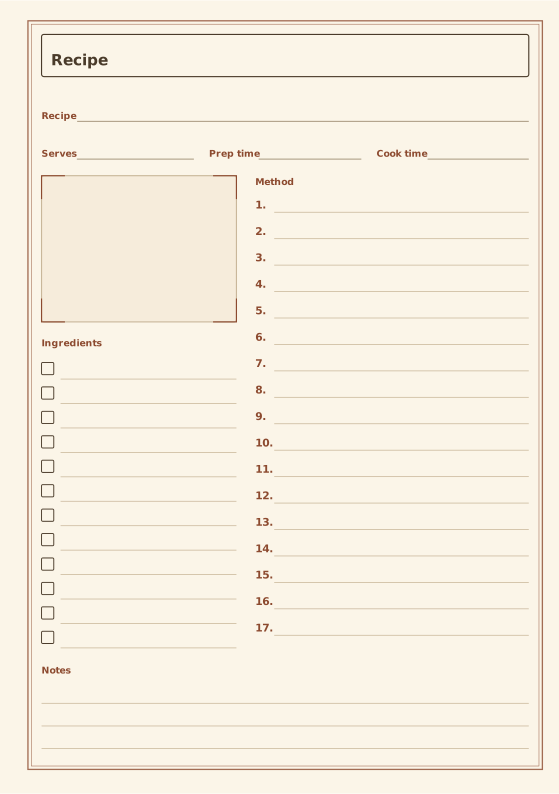
Keep a recipe binder. When a meal works, write it on a Recipe Page with servings, times, an ingredients checklist and the method. Over a few months you collect your own cookbook of tried-and-tested meals, and planning gets even faster.
Meal planning on a budget
- Plan around what is in season or on offer this week.
- Cook once, eat twice: double recipes and use the second portion for lunch or the freezer.
- Use cheaper proteins such as beans, lentils and eggs a few times a week.
- Stick to the list, and do not shop hungry.
- Track your food spending for a month with an Expense Tracker to see where the money goes.
Print your meal planner
- Open the Meal Planner on US Letter or switch the page size to A4. It covers breakfast, lunch and dinner for each day, with an optional Snacks column and Grocery list.
- Print four pages for a month of planning, and stick the current week on the fridge.
- For a kitchen notebook, use A5 or Half Letter and add Shopping List and Recipe Page pages with Add pages, then print it as a booklet and staple it.
More household pages, such as cleaning schedules and budgets, are on the home ideas page. To combine meal plans with a calendar, see how to make your own planner.
FAQ
How do I start meal planning as a beginner?
Plan only dinners for the first week, use two or three meals you already know well, and include one leftovers night. Add breakfasts and lunches once the routine feels easy.
How many meals should I plan per week?
Five or six dinners is a good start. Leave one night for leftovers or eating out, so the plan still works when things change.
How do I meal plan for picky eaters?
Choose build-your-own meals such as tacos, wraps, rice bowls or pizza, where everyone picks their own toppings from the same ingredients. Let each family member choose one dinner a week.
Should I plan breakfast and lunch too?
Only if it helps. Many people rotate a few simple breakfasts and use dinner leftovers for lunch, and plan only dinners in detail.
Featured templates
Start from a template, then change line spacing, dates, colors and layout options.